Feature
Myeongjae House, the Quintessence of Joseon-era Gentry Residences
Myeongjae House, the Quintessence of Joseon-era Gentry Residences
By Text by Han Jiman, Professor of Architecture at Myongji University Photography by Han Jiman, Clipartkorea
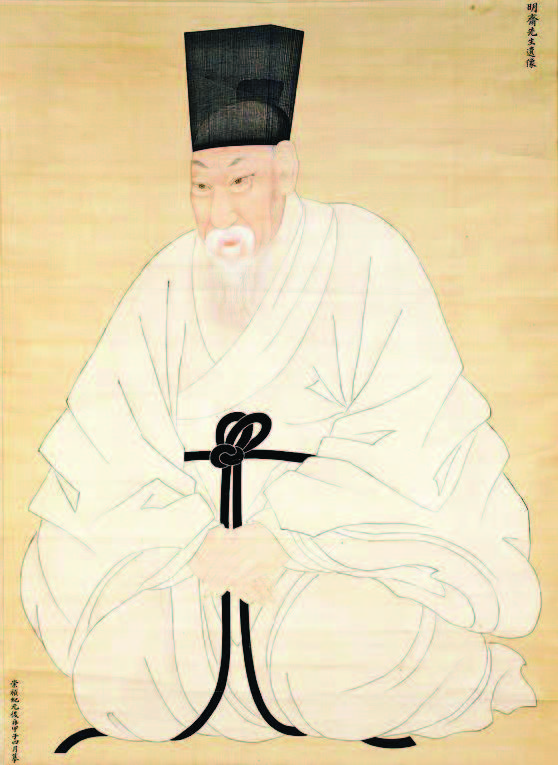
A portrait of Yun Jeung. A member of the Papyeong Yun clan, he was a prominent scholar in ritual studies.
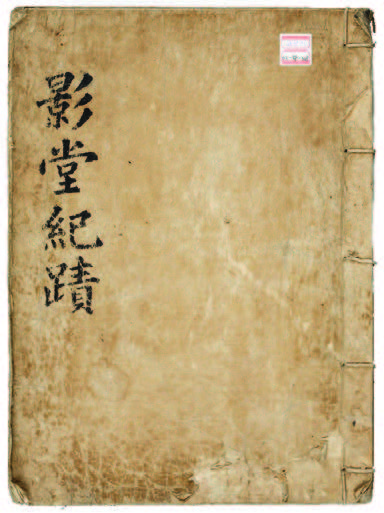
Cover of Yeongdanggijeok (Record of the Memorial House), a compilation that includes pictures of Yun Jeung’s memorial house where his portrait was enshrined, as well as details on how his portrait and its copies were produced.
Myeongjae House was entered onto the National Folklore
Cultural Heritage list in 1984 as an example of aristocrats’
houses from the second half of the Joseon Dynasty (1392–
1910). It is located in Noseong-myeon in Nonsan City,
Chungcheongnam-do Province. Yun Jeung (1629–1714),
a Neo-Confucian scholar active during the reign of King
Sukjong (r. 1674–1720), had it constructed in the early 18th
century and moved there from a nearby home. It takes its
name from his sobriquet Myeongjae.
The neighborhood where Myeongjae House is situated was
the longtime social and political base for Yun’s Papyeong Yun
clan, who had lived there for generations. Yun Jeung became
known across the country as an academic and ideologist while
still residing in the area. The 17th century, the era in which
Yun earned fame as a Neo-Confucian scholar, was a period
known for ritual study. Two foreign invasions over the span
of a few decades—first the Japanese (1592–1598) and then the
Manchus (1636–1637)—led the ruling elite of Joseon, known
as yangban, to seek the restoration of stability and order in
society through the application of stringent feudal protocols.
They sought theoretical underpinnings for this pursuit
through ritual study.
Yun Jeung provided the archetype for how an ideal ritual
scholar should live. He not only possessed celebrated
intellectual prowess, but abundant economic resources as
well. However, he lived as a humble academic practicing
careful frugality. Although he was called on by the king several
times to serve in important government posts, Yun declined
them all and never withdrew from his position of criticism
of the injustices manifested in central politics. He remained
rooted in his hometown all his life, dedicating himself to selfcultivation
and nurturing the next generation of scholars.
Today’s image of the homes of a Joseon-era aristocrat is based
on the gentry houses that were widely built as ritual study was
considered the pillar of social order in the 17th century. For
the ritual scholars of the time, houses were more than just a place of residence. Their homes
needed to provide a space for properly practicing the Confucian proprieties in their everyday
lives, particularly the four most important rites of passage: gwallye (coming-of-age ceremony),
hollye (wedding), sangnye (funeral rites), and jerye (ancestral rites). For a suitable house,
men’s and women’s quarters needed to be kept separate and a shrine housing ancestral tablets
needed to be prepared. The sarangchae, the quarters for the male head of the household, was
an imposing structure occupying the front of the house, while the anchae (women’s quarters)
were seated behind the male head’s quarters and as far as possible from the front. Despite the
usual local variations, aristocrats’ houses from the second half of the Joseon Dynasty were
constructed based on these norms.
Myeongjae House is situated facing south where the southern skirts of Mt. Noseongsan begin
to flatten out. Gentle hills hug the house on its either side, and the low-rising woods to the
front prevent a full view of the house from the outside. There is a hyanggyo Confucian school
to the west of the house. The rectangular pond with a circular island can be found to the west
of the entryway belongs to the house.
The site of the house is composed of three escalating terraces cut into the slopes of the
mountain. The lowest terrace accommodates the courtyard of the sarangchae, the middle
terrace the sarangchae, and the highest terrace the anchae and its courtyard. If you enter the
sarangchae’s courtyard after walking along the eastern side of the pond, you gain a full view
of the impressive stature of the sarangchae with Mt. Noseongsan as a backdrop. The anchae is
hidden behind the servants’ quarters to the west of the sarangchae. To the east of the anchae
can be found an enclosed area housing the ancestral shrine. This layout reflects the Confucian
ritual code that the ancestral shrine should be placed to the east of the main quarters in a
literati house. The male head of the household is the primary performer of Confucian rites.
He should be able to go from the sarangchae directly to the ancestral shrine without passing
through the women’s quarters. It is said that Yun Jeung would visit the shrine to pay his
respects to his ancestors every morning and whenever he returned home after an outing.
The sarangchae on the middle terrace is a hipped-and-gabled roofed building with four kan
(or bays) across the front. It is not a large structure, but seems grand and lacking of nothing.
It is unostentatious but dignified. This must be the way Yun Jeung wished his sarangchae to
appear. Upon a closer look at this relatively modest structure, you will be surprised by the
ways in which the building enables diverse spatial experiences and offers good views of the
scenic landscape. Among the four bays across the front, the two central bays form the primary
room with ondol underfloor heating and a narrow wooden veranda to the front. The bay to
its east is filled by a wooden-floored room. The bay to the west of the primary room has been
made into a pavilion structure with a raised floor. The frontage of the pavilion consists entirely
of windows, offering a sense of diversity to the frontal view of the building. From the pavilion,
you can appreciate the pond at the front of the house and the surrounding scenery. There is a
secondary room to the rear of the pavilion. This two-bay-deep room is structurally connected
to the servants’ quarters. Between the primary room and secondary room is a small ondol
room where servants could temporarily stay and wait for orders.
There are two wooden boards hanging at the pavilion. They are respectively inscribed with
Ieunsisa, meaning “A House of Seclusion beyond the Secular World,” and Dowoninga, “Peach
Blossom Paradise.” These phrases allude to the aspirations of Yun Jeung, who refused all
opportunities to work in government and devoted himself to self-cultivation and study in the
countryside.
Up a staircase to the west of the sarangchae, past a small courtyard, and along the two-bay
passage is the servants’ quarters. Anyone who took this route could be seen—and examined—
by the male head of the household as he sat on the pavilion of the sarangchae. You must
open the door on the west side of the passage to enter the anchae. Beyond the door is a wall
blocking any direct view of the anchae, which was the primary space for family life. You can
only arrive in the courtyard of the anchae by slightly moving your body diagonally to the east.
This is an architectural technique often found in the passages in Joseon-era gentry houses.
The anchae has a south-facing U-shaped layout. With its courtyard in the center, the anchae
has a spacious five-bay wooden porch across the front. The wooden floor and the courtyard
create a sense of continuity, removing any potential feelings of stuffiness from the women’s
quarters tucked away in the innermost portion of the house. The wings on either side of the
courtyard differ in scale. However, they agree in appearance and height on the side facing the
courtyard, elevating the sense of order in the courtyard space. The roomy wooden porch was
used as a living space for the family. It doubled as a ceremonial space for ancestral rites as
well. As it was a common practice for Joseon aristocrats to observe rites for four generations
of ancestors, it can be assumed that ancestral rites were held at least eight times a year in this
space. The large wooden floor and the orderly courtyard allowed the many descendants to
carry out ritual procedures for ancestral rites in the proper manner.
The west wing was the space overseen by the woman responsible for the household economy.
The west wing has a main room and large kitchen, while the east wing is equipped with a
smaller room and smaller kitchen. The west wing is wider than the east by half a bay. Beyond
the back door of the large kitchen is a storage building. From there you can proceed toward
the backyard, where a platform for earthenware jars containing sauces was installed.
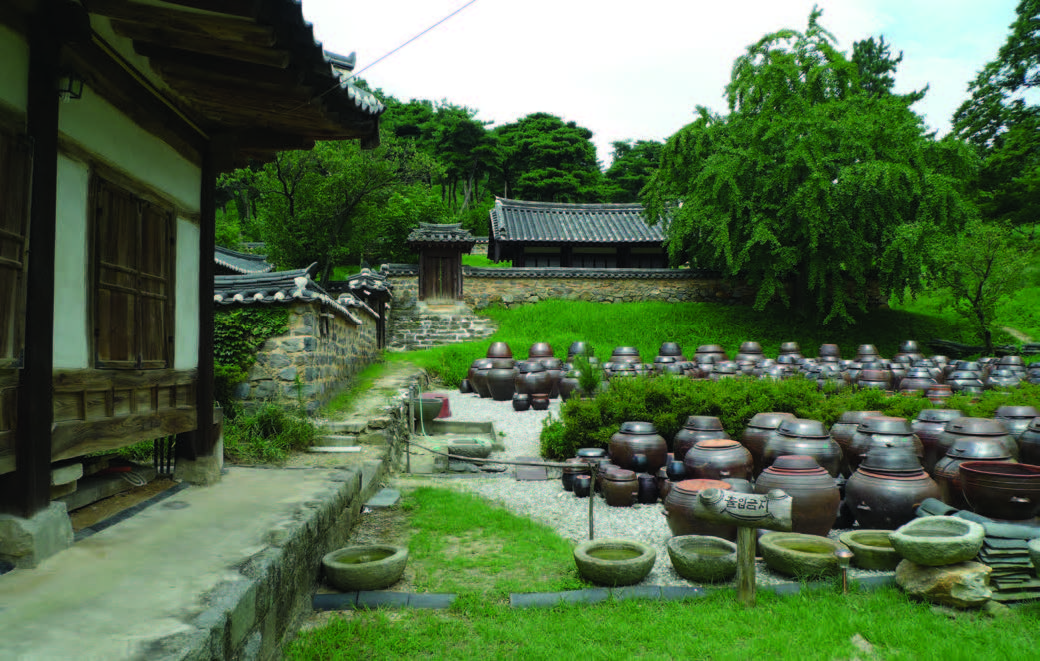
Sarangchae and Sadang (shrine) in Myeongjae House
A good way to enjoy a tour of Myeongjae House is to appreciate its diverse courtyards.
While the courtyard of the anchae was used for ancestral rites, the courtyard belonging to
the sarangchae provided a place for congenial gatherings of clan members. There is a long
and narrow courtyard behind the back of the east wing of the anchae. It was through this
courtyard that ancestral tables were transferred to the wooden floor of the anchae from the
ancestral shrine to its east. The passage for ancestral tables was made through a gate in the
wall dividing this courtyard from the shrine. Looking southward from this gate, you can see
a chimney made of stacked roof tiles and, at the end of the courtyard, a garden planted with
eye-catching trees.
The backyard of the sarangchae is worth noting as well. This yard is functional: It connects
the sarangchae to the anchae and the ancestral shrine. A spatial dynamic is created in this
functional space through the secondary room of the sarangchae that protrudes into this yard.
The side of the sarangchae’s secondary room that faces this yard has a narrow wooden veranda
facilitating entry. These outdoor spaces not only promote the observance of Confucian rites,
but also allow residents to have dynamic spatial experiences in their everyday lives.