Feature
Traditional Korean Farming: Community Cooperation and Coexistence with Nature
By Choe Yun-hui (Head of the Curatorial Office in the Museum of Agriculture)
Korea’s cultural arts, particularly its TV dramas, movies, and music, have captured international attention since the early 2000s. Today, over ten million people visit Korea every year, with many flocking to Seoul, the nation’s capital. In addition to international visitors, many Koreans have moved to Seoul, transforming it into a vibrant hub of cultural and artistic diversity. Yet, just an hour's drive from the bustling capital, you can find a completely different landscape. Korea has four distinct seasons and a natural bounty. Its culinary culture revolves around rice, which has defined the nation’s landscape and daily life for its people. Despite significant changes in dietary habits over time, many fields and paddies remain, contributing to Korea's picturesque scenery. It is in these rural areas that the community spirit of Korean farming culture truly comes to life.
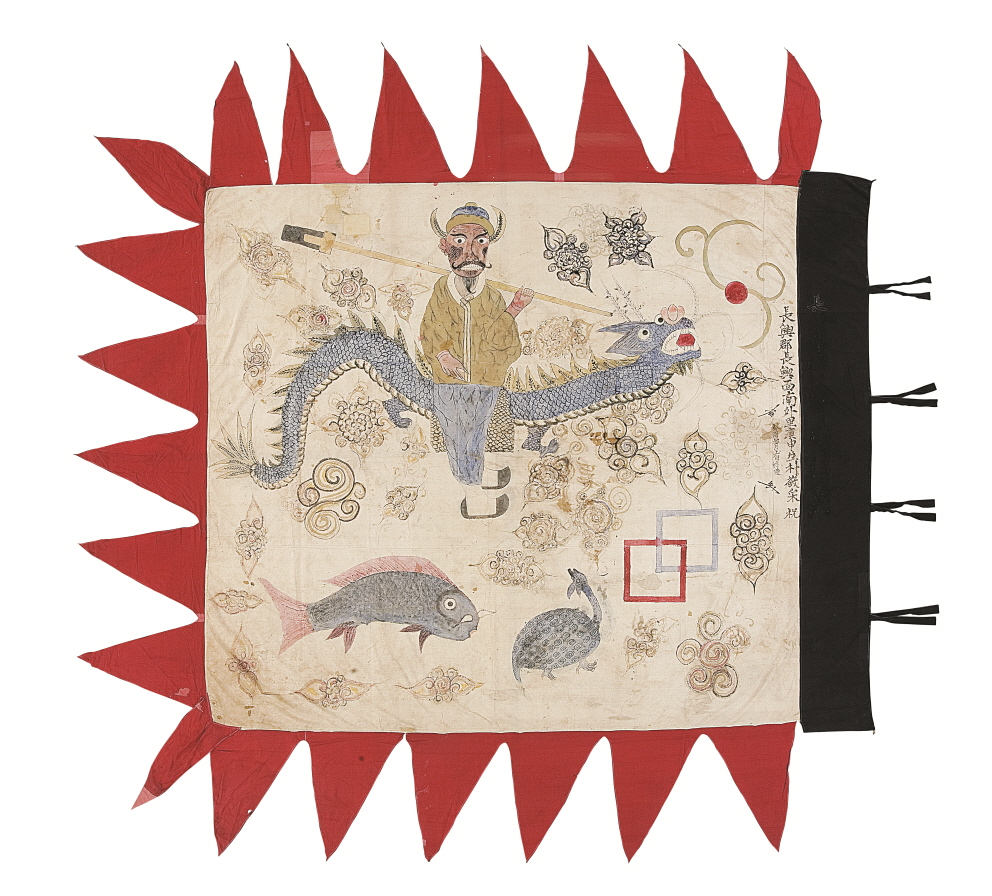
Nonggi (Village Agriculture Banner)
Farming is seasonal. Rice, the national staple, is usually planted in February according to the lunar calendar. The first breaking of the ground with a plow harnessed to oxen used to heraled the beginning of the year’s farming. According to historical records, oxen began to be used in farming in the third year of King Jijeung of Silla (502 CE), and such implements as the ttabi, a wooden handheld plow, and the gyeorijaenggi, a plow pulled by two yoked oxen, were also used. A variety of farming tools, such as plows and hoes, were used depending on the field location and size and planting method. Farmers soaked rice seeds in water to get rid of empty husks before sowing. In preparation for rain, they cleared the paddies of stagnant water and made new waterways. Water was lifted from streams or puddles using such tools as the matdure, a big wooden water bucket usually carried by two people. Drawing water was an important task that required village residents to work together.
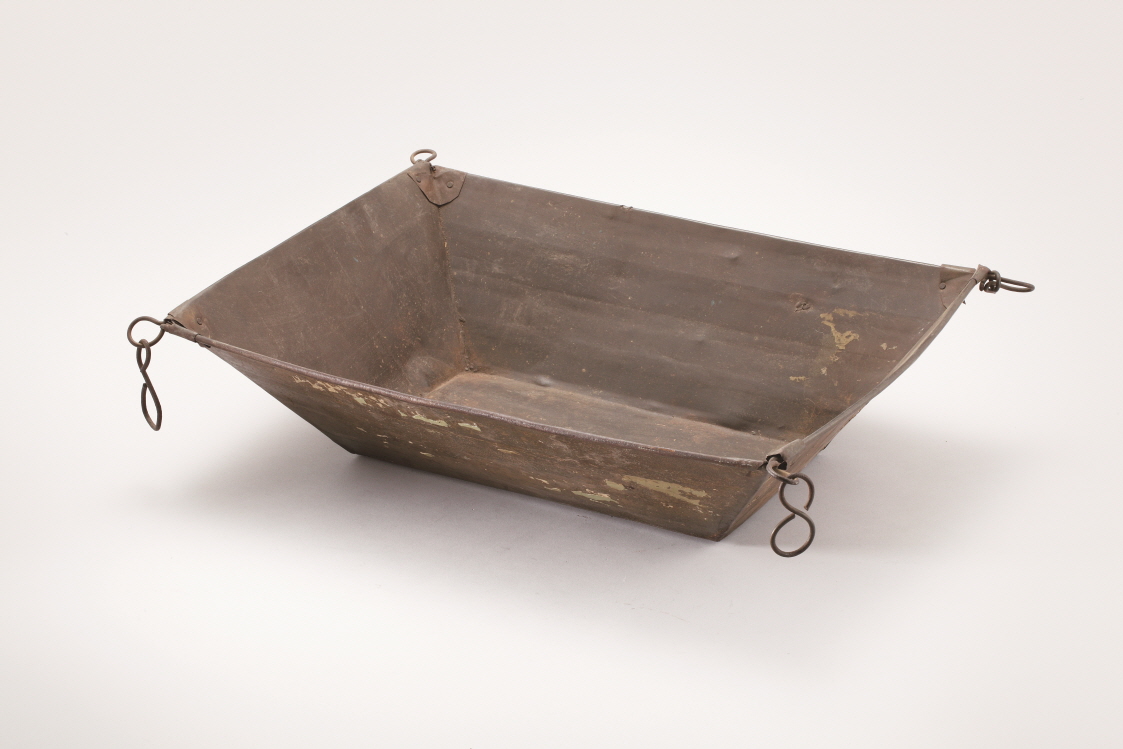
Matdure (Water Scoop)
Monaegi refers to transplanting rice seedlings in spring after sprouting rice seeds in a separate patch of paddy. Rice seedlings before transplanting are called mo, and the place where mo are grown is called motjari. When farmers transplanted the seedlings from the seedbed to the paddy, two people, known as motjuljabi, stood at either end of the paddy holding a rope. Other farmers planted the seedlings at regular intervals along the line indicated by the overhead rope. Monaegi is a task typically requiring that the seedlings are planted at the same pace, so breaks are taken together. It is a productive yet intensive task, which led to the formation of dure, a communal labor organization at the village level, and pumasi, a reciprocal labor exchange based on dure. Pumasi combines the word pum (working) and asi (repayment).
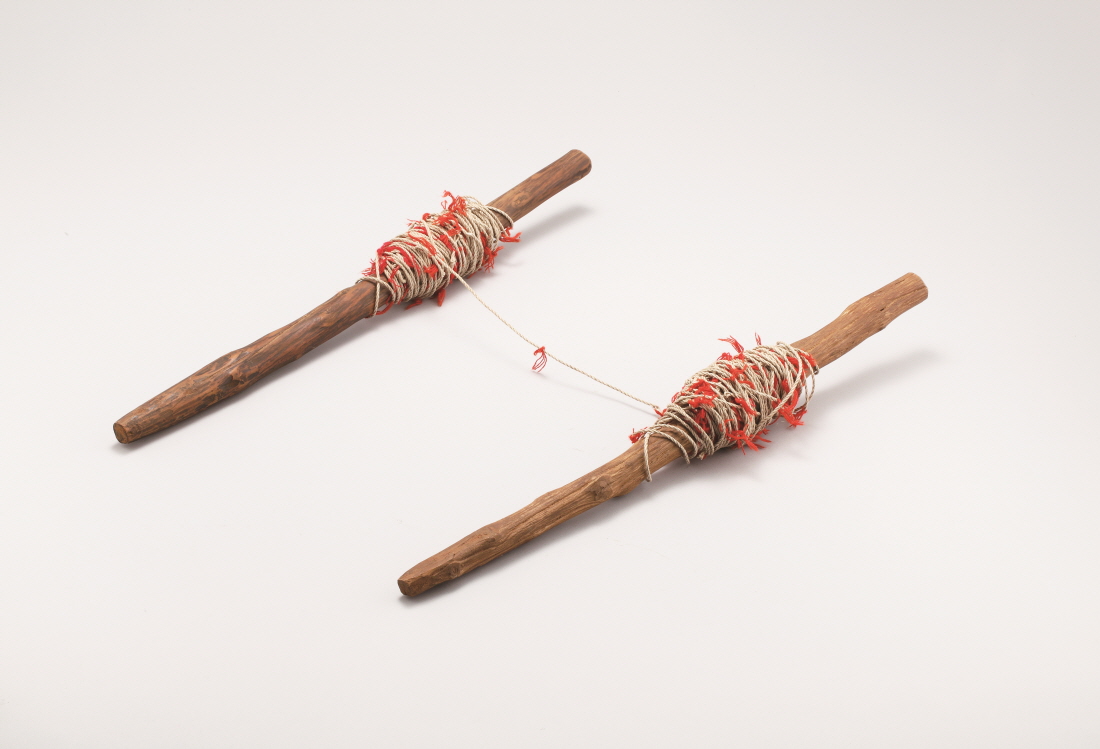
Motjul (Guide Rope)
Besides those who planted mo in paddies, saechamkkun, who prepared food — known as saecham — for the workers and delivered it to the paddy in large baskets, were also considered participants in pumasi. Farming required hard physical labor, so there were breaks to eat saecham between meals, usually consisting of simple food and makgeolli. Farmers enjoyed the refreshment along with impromptu farmers’ music, nongak, such as the representative folk song of Gyeongsang-do, “Kwaejina Chingching Nane,” to wash away fatigue and recharge. They sang the chorus together with traditional Korean instruments such as the kkwaenggwari (a small flat gong), the jing (a large gong), and buk (a drum).
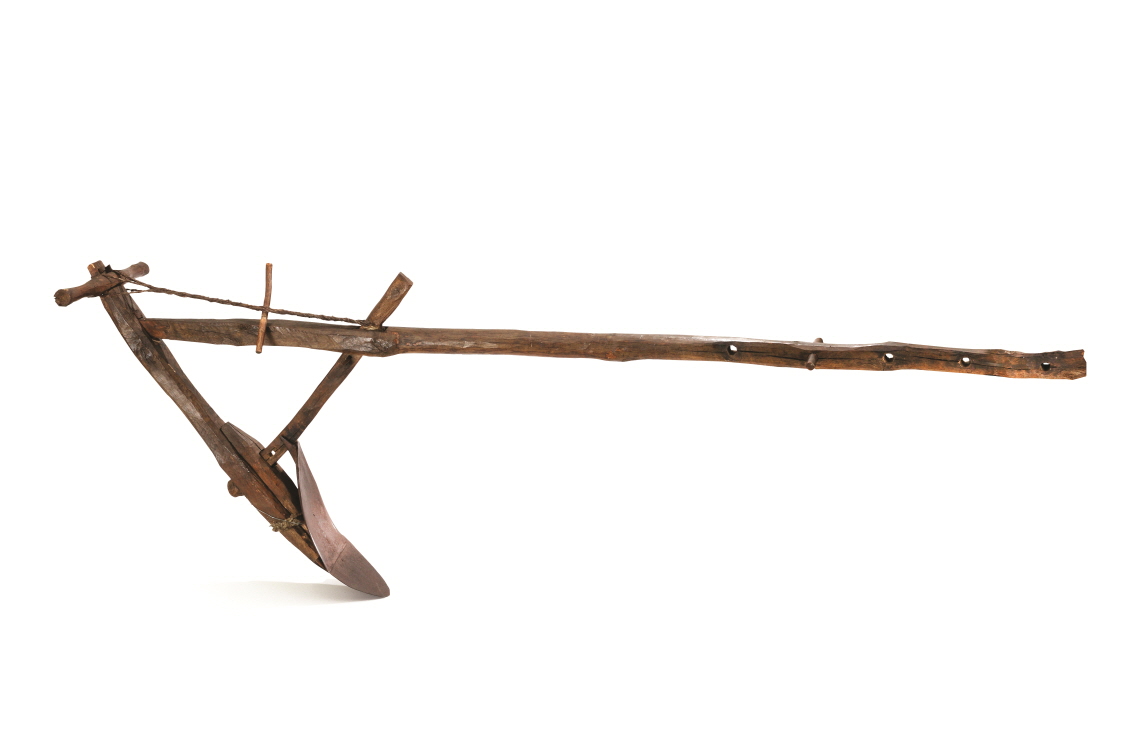
Gyeorijaenggi (Plow)
Recently, a Korean hand hoe known as homi has been attracting attention overseas. Homi is used in gimmaegi, which refers to removing weeds that hinder crop growth and loosening the soil between plants. Overall, the use of homi is intended to ensure the optimal growing environment for the crops, which is essential in farming. Gimmaegi was traditionally done three to four times a year through pumasi. The practice of pumasi, in which villagers shared labor, savory food and lively music to ensure a good harvest and make the arduous work of monaegi enjoyable, epitomizes the long-held wisdom of our ancestors.
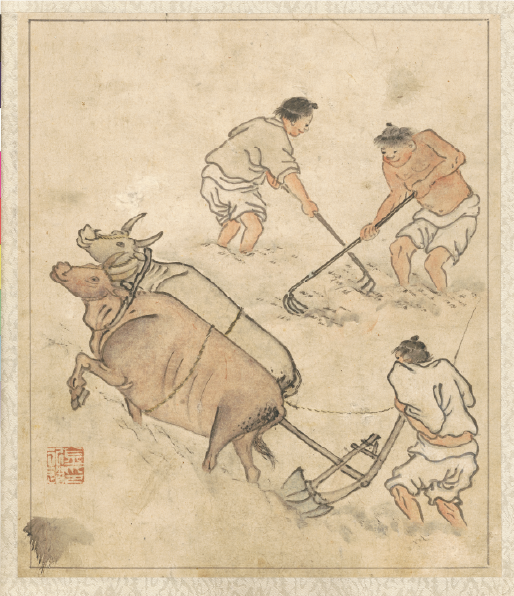
Kim Hong-do, Lunchtime, Album of Genre Paintings, National Museum of Korea