Feature
A Royal Table during the Joseon Dynasty
By Jang So-young, Professor of Culinary Art at Kyungmin University Photos by the Korean Royal Cuisine Culture Foundation
Food as a Carrier of Culture
Eating is about more than just relieving hunger and absorbing nutrients. It is also a cultural act of consuming the symbolic meanings carried by food. The cuisine of a particular community is often considered an indicator of its cultural development. As the Korean Peninsula was governed by a monarchy into the early 20th century, the culinary traditions of the royal family can be thought of as demonstrating the culmination of fine Korean dining. Written records on royal cuisine remain only from the Joseon Dynasty, which ruled the Korean Peninsula from 1392 to 1910. The government of the Republic of Korea placed the royal cuisine of the Joseon Dynasty on the national intangible heritage list in 1971 and has been managing it as an important component ever since.
Dexterous Makers of Royal Cuisine
During the Joseon era, local governments offered food ingredients particular to their areas to the royal court as tribute. These food offerings were collected at a royal food office called the Saongwon and cooked for the king and other members of the royal family including the queen, crown prince, and queen dowager. There were separate cooks and cooking spaces designated for the king and other royal family members. It is known from the information currently available that roles were divided in the late Joseon period between court ladies and male cooks. Among the ladies-in-waiting working in the royal kitchen, those holding the title sanggung were in charge of preparing everyday meals for the king and other royalty. Meanwhile, there were professional male cooks known as suksu who took charge of royal feasts. Court ladies making food for the royal family normally started their careers as cooking assistants in their early teens and around the age of 40 began to function as fully- fledged chefs at the royal kitchen. This means that the court ladies serving as royal chefs were highly skilled cooks with about 30 years of experience under their belts. Suksu were professional cooks who specialized in respective areas and methods of the cooking process. Their specializations included controlling fire, grilling fish or meat, cooking rice, making tofu, fermenting alcoholic beverages, brewing tea, setting tables, and managing cooking devices and utensils. Food ingredients coming in from every corner of Korea were boiled,grilled, and fried. The skills of these cooks were applied to turn them into dishes that were pleasing to the eyes as well as the palate.
Everyday Meals for the King
Rice holds the central position in the Korean diet. An average Korean meal is considered to be comprised of a bowl of rice and the rest of the food. The dishes other than rice on a Korean table are regarded as sides accompanying the rice. This explains why meals are referred to as a bap-sang in Korean, with bap and sang respectively meaning “rice” and “table.” During the Joseon Dynasty, the word bap was replaced with jinji when denoting rice for aristocrats and sura for the king. The number of side dishes prepared for a “rice table” were graded depending on the social status of the person it was prepared for. Joseon monarchs enjoyed a table set with 12 side dishes. The king of Joseon normally ate four times per day. He had a thin gruel made of rice or another starch early in the morning before breakfast. At times the king might be served an infusion of medicinal herbs instead of gruel. He enjoyed snacks or a bowl of noodles in the middle of the day. For his breakfast and dinner, a range of dishes were set out. There would be rice and other basic dishes along with 12 side dishes prepared for the king’s meals. Two kinds of rice were included—glutinous rice cooked in water where red beans had been boiled and plain white rice. Soups came in two varieties as well: seaweed soup and beef- bone soup. Among the two types of rice and soup, the king could choose one over the other as he wished on a given day. Some dishes were always set on the king’s table but were not taken into account when calculating the number of side dishes, including sauces, kimchi (fermented vegetables), and stews. The 12 side dishes to be set on the king’s table were made from diverse ingredients including vegetables, fish, and meat and utilized a variety of cooking methods. All in all, a meal was prepared for the king that was well balanced in both nutrition and taste. Among the many foods and ingredients used to fill the king’s table, kimchi was a good provider of dietary fiber and probiotic bacteria. The traditional Korean soy sauce (known as ganjang) made from fermented soybeans was primarily used to season dishes, adding to the flavors of the king’s meals. Fermented fish (known as jeotgal), another type of traditional Korean fermented food, was an important dish for striking a nutritional balance. It was used to make kimchi and to flavor other dishes, but could also be served on its own.
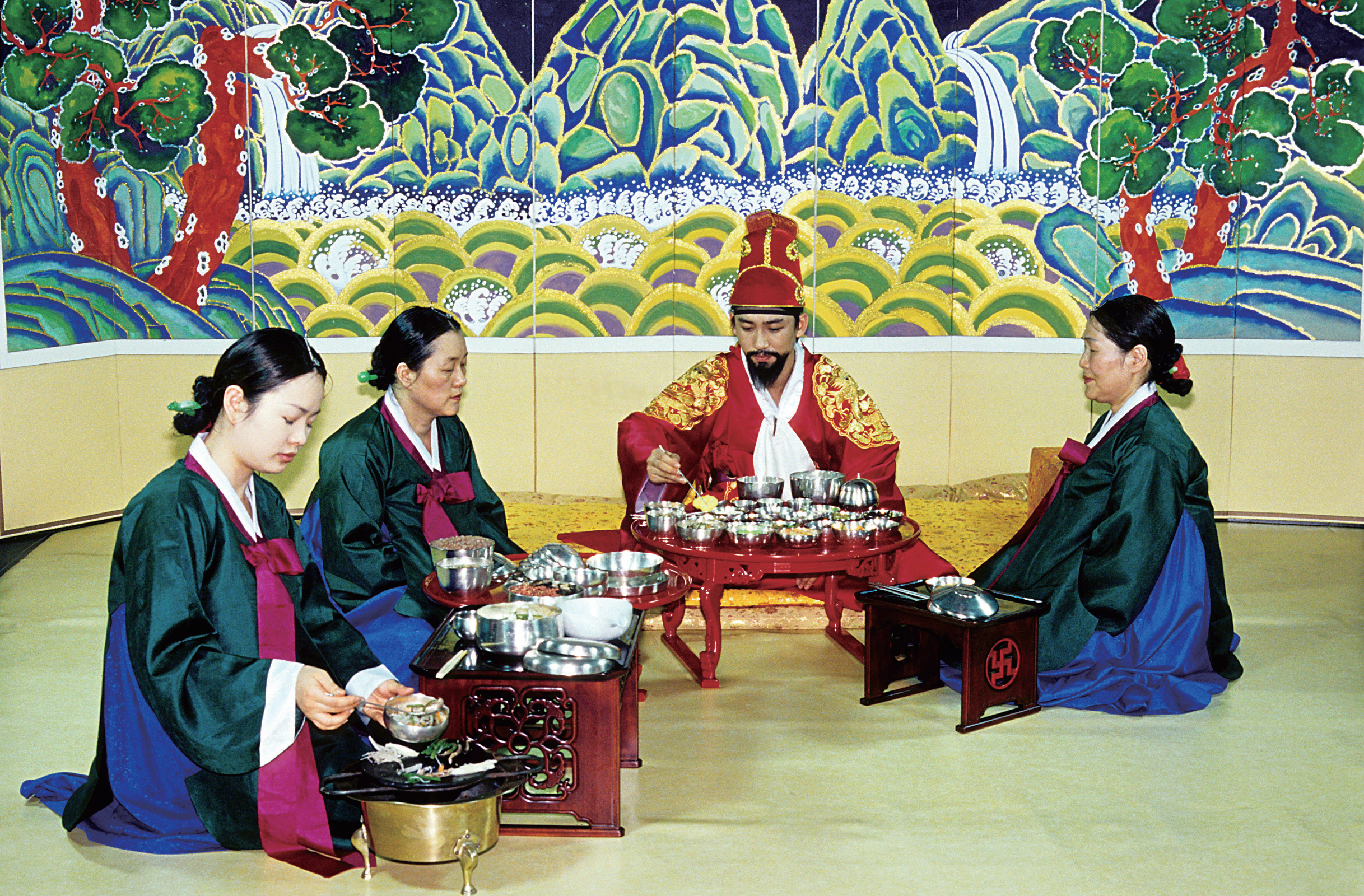
A reenactment of royal dining
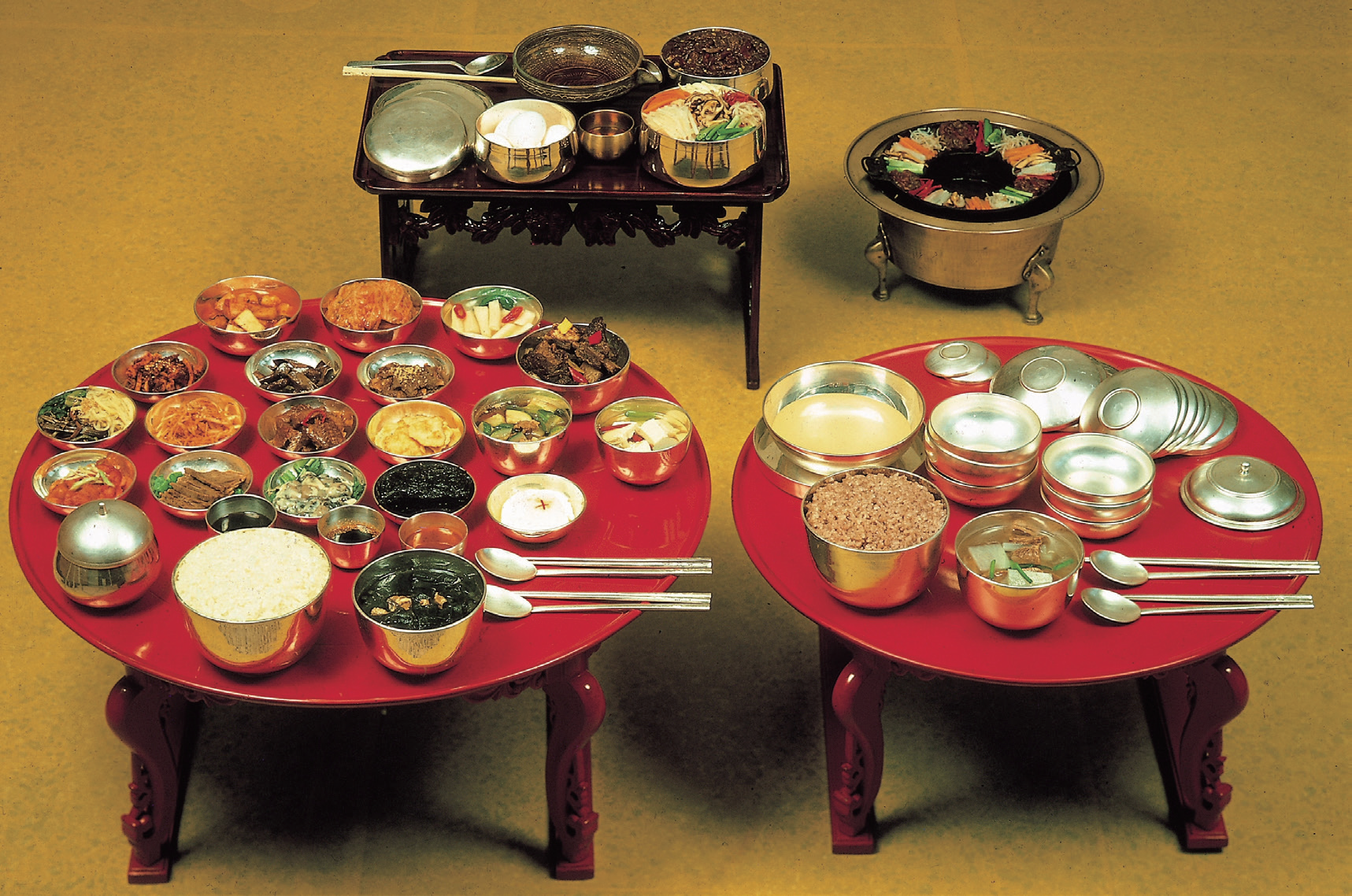
A table set in the style of a royal meal during the late Joseon era
Considerate Table Setting
Food for the king was prepared in careful consideration of who would consume it. It was prepared to be served as individual bites or involved considerable julienning and mincing in an effort to assist with the king’s eating and digestion. When setting the table, rice and soup and other hot foods were placed closer to where the king would sit. Bowls and dishes of different materials were selected by season in consider of their capability to keep foods cool or maintain their heat. Porcelain vessels were used during the summertime and silver dishes prevailed from the autumn through the spring. Two sets of spoons and chopsticks were prepared for every meal, with one set reserved for dishes cooked with oil. This was done to prevent any oily flavors from interfering with the full enjoyment of the flavors of other foods, just like the sets of silverware put out for a multi-course meal in the Western tradition.
Food as Medicine
In 1460, the royal physician Jeon Sun-ui wrote Korea’s first compilation on dietary therapy, titled Singnyochanyo. He stresses in his book that food should come before medicine when it comes to treating health conditions and disease. Documents from the Joseon period, such as Joseon wangjo sillok (The Annals of the Joseon Dynasty) and Seungjeongwon ilgi (The Journal of the Royal Secretariate), confirm that physicians from the royal pharmacy (Naeuiwon) prepared foods for the king along with the sanggung court ladies and suksu cooks. According to these records, royal physicians gave directions on what kinds of foods were to be included in the king’s meals depending on his health condition, and sometimes even did the cooking themselves. Meals for the king were designed to optimize the health benefits in consideration of the change of seasons. Spring days required foods for stimulating the appetite; extreme weather in summer and winter was combatted with dishes respectively known for their effects of reducing body heat or producing warmth. Freshly harvested crops were preferred for the king’s meals in the autumn.
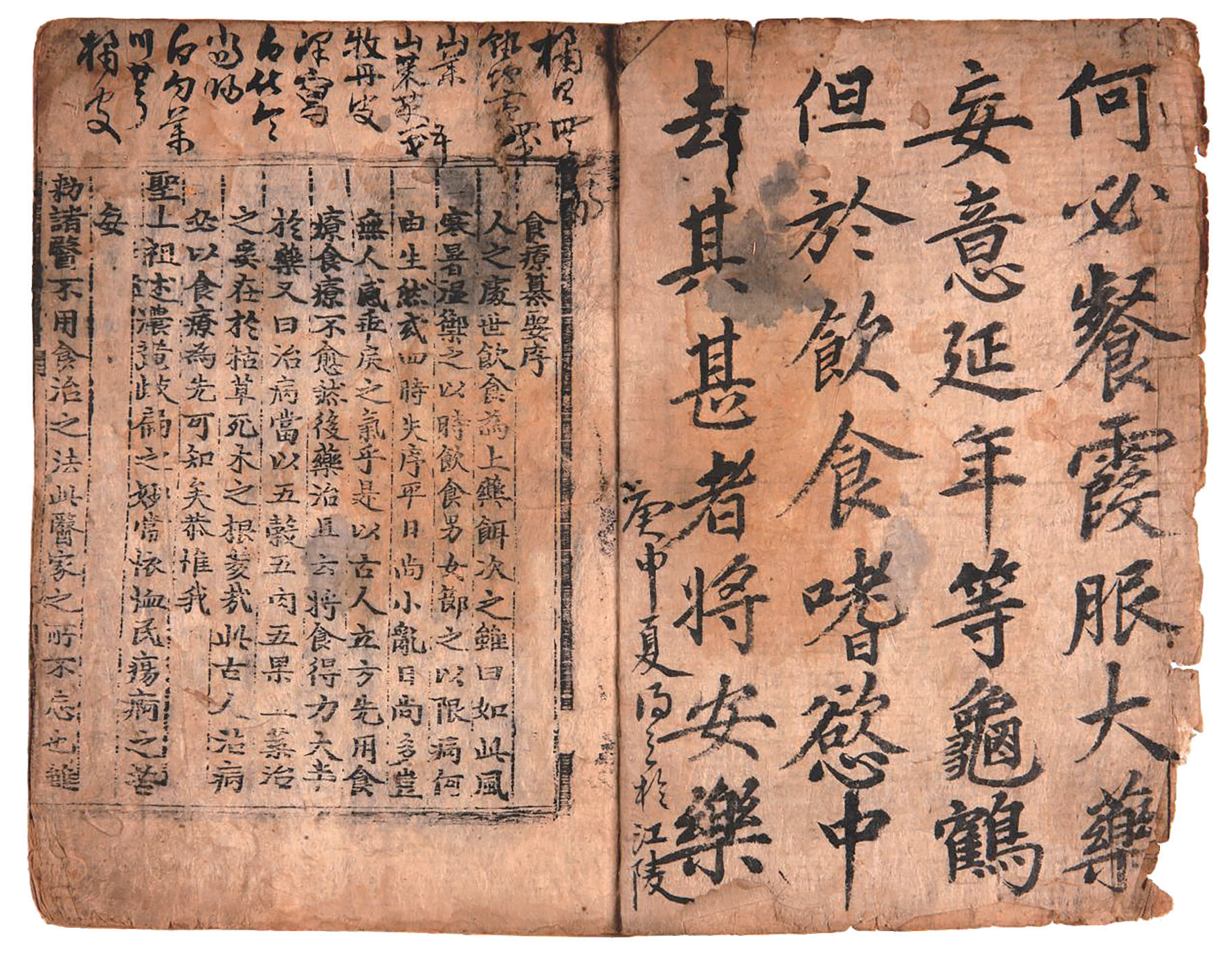
Korea’s first compilation on dietary therapy, entitled Singnyochanyo; compiled by the royal physician Jeon Sun-ui in 1460
Festive Foods
The more artistic qualities of Joseon’s royal cuisine were manifested through banquet dishes. Feasts were thrown to celebrate joyous events for the state or for the royal family. The foods to be presented at a royal feast were plated using a distinctive towering method. Each variety of food was piled up on a dish to a height of 15 to 45 centimeters, sometimes creating beautiful patterns through the layers of food. These towering dishes were prepared to deliver heartfelt wishes for the longevity and prosperity of the royal family and of the dynasty. Details on these distinctive party foods—including how varied they were and high they were stacked—can be found in related uigwe, a type of record that was produced during the Joseon era to detail individual state events both in writing and in pictures for later reference.
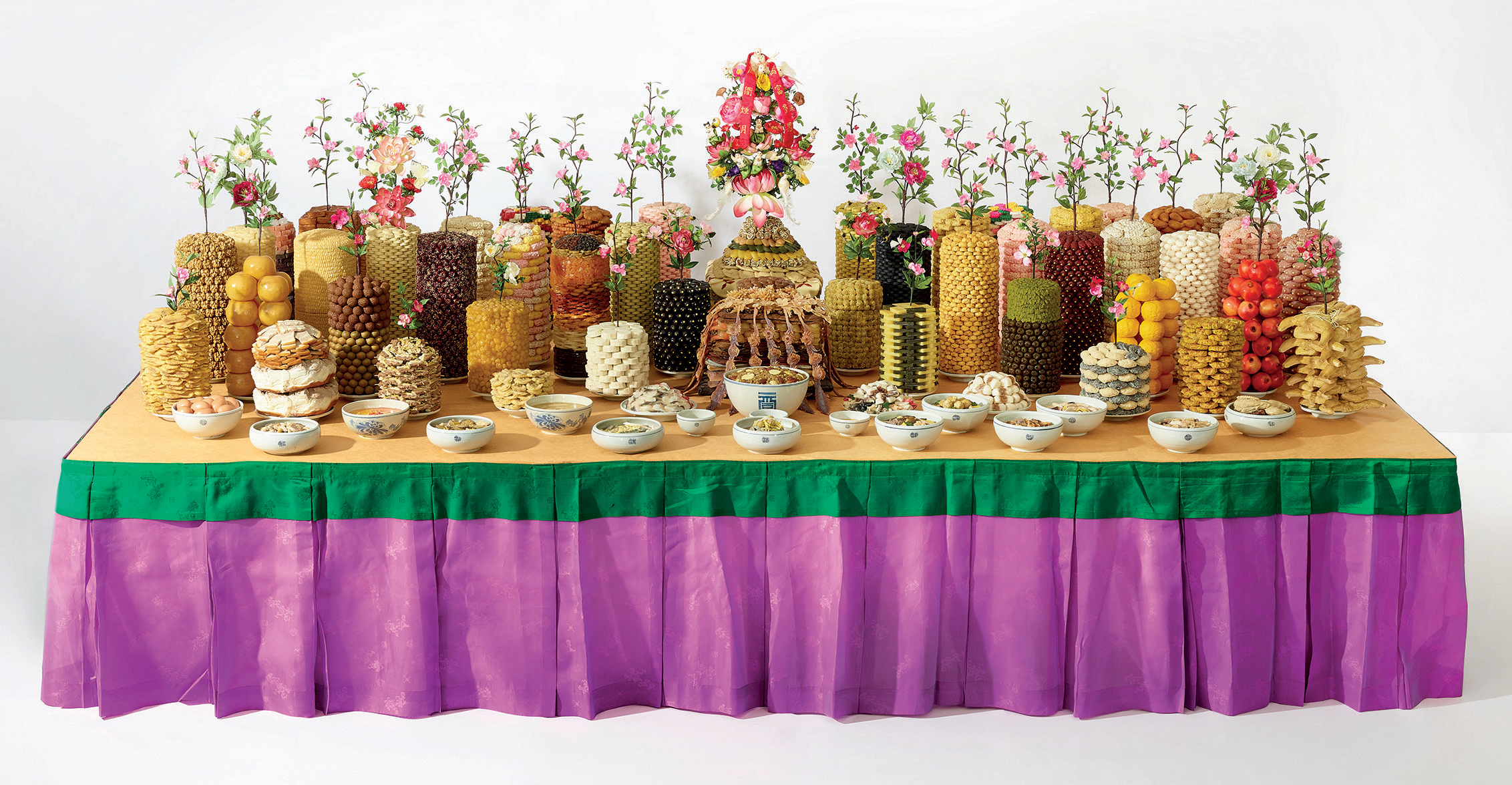
A reenactment of the banquet celebrating the 60th birthday of Lady Hyegyeong, the mother of King Jeongjo
Towering Cakes and Confections
The most popular type of party food prepared using the towering method were tteok, the Korean equivalent of cake. Rice powder or flour made from other grains was steamed, boiled, or pan-fried to produce tteok. Fruit, vegetables, and edible flowers could be added to enrich the colors and/or flavors. There are more than 200 varieties of tteok found in uigwe records. Another indispensable celebratory food presented in the piled-up form was confectionary. Confections set out on a party table included deep-fried wheat dough soaked in honey (yumilgwa), grain powder kneaded with honey and pressed into a patterned mold (dasik), cooked fruits boiled in honey (jeonggwa), and a form of fruit jelly (gwapyeon). Towering dishes symbolizing the authority of the royal family were decorated with paper or silk flowers on top.
Royal Foods Shared Beyond the Palace
The abundance of piled-up foods set out at a party were not entirely consumed at the site. These festive foods could be shared with participating ministers and other courtiers. Guests at a royal feast brought home foods offered by the king and enjoyed them with their families. This provided as an opportunity for the royal cuisine of the Joseon Dynasty to interact with food traditions of the private sector.
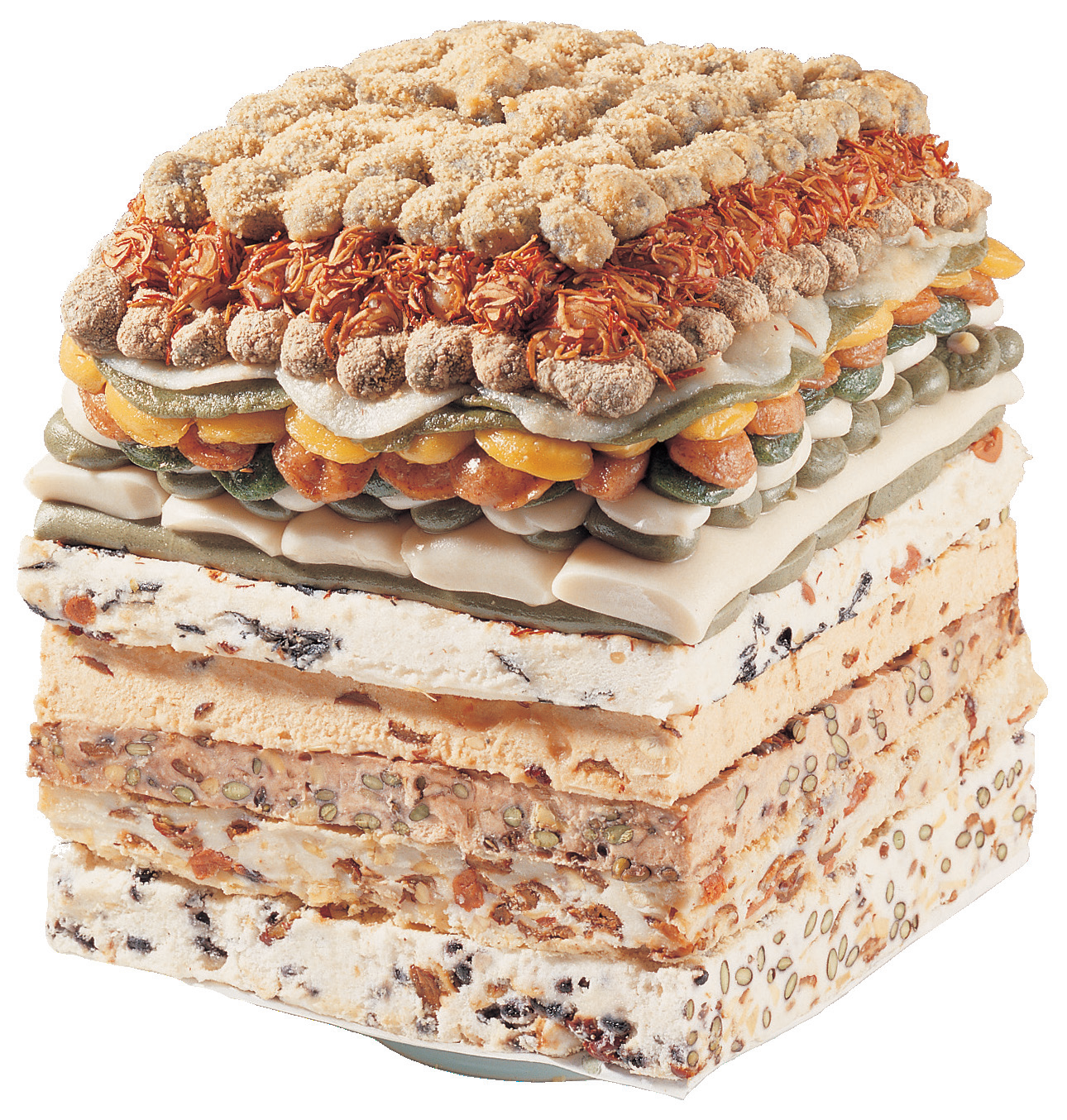
A towering cake, the definitive party food for the royal family