Feature
Gifted Musicians in Korean History
By Lee Yong-shik
The geomungo is a six-stringed zither originating in the fifth century or earlier in the Goguryeo Kingdome. (Photo courtesy of the National Gugak Center)
The Korean boy band BTS commands massive popularity across the globe and their songs have topped the Billboard Hot 100 chart several times. The music video for their latest song “Permission to Dance” has incorporated international sign language into its choreography, showing how music and dance can go beyond the boundaries of pure entertainment to function as an effective means to convey social messages. This boy band’s musical accomplishments did not come out of thin air, however, and are deeply rooted in the longstanding traditions of the Korean people involving music, dance, and song. There have been a great number of brilliant musicians through Korean history.
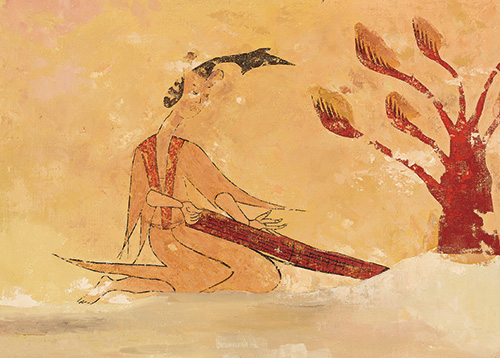
The geomungo is featured in the murals of Muyongchong Tomb (“Tomb of the Dancers”),
a Goguryeo tomb in Ji’an in China. This painting is a modern representation of
the geomungo mural of the “Tomb of the Dancers.”
(Photo courtesy of the National Museum of Korea)
Ancient Rites Featuring Singing and Dancing
Records on the musical tradition of ancient Korea can be found in Volume 30 (the “Eastern Barbarians Section”) of The Records of the Three Kingdoms, a third-century Chinese history authored by the politician and writer Chen Shou. According to these accounts, ancient polities occupying the Korean Peninsula and Manchuria, such as Buyeo, Goguryeo, Ye, and Samhan, had their respective traditions for worshipping the heavens. An entire community could go on for several days of non-stop drinking, singing, and dancing during these ceremonies. It has been suggested that these ancient rites could have taken on the form of a harvest ceremony such as a ganggangsullae, a circle dance performed by a group of singing women holding hands under the full moon. The constant singing and dancing over multiple days must have been striking to the eyes of the Chinese and were therefore noted in their histories. These third-century Chinese records demonstrate that a love for dance and music dates back to at least ancient times.
Father of the Geomungo
The first musician appearing in a Korean history is Wangsanak from the Goguryeo Kingdom (37 BCE–668 CE). The relevant records are found in Samguk sagi (The History of the Three Kingdoms), a 12th-century historical record of the Three Kingdoms period (57 BCE–668 CE). It describes how Wangsanak crafted a new musical instrument and composed over 100 pieces of music for it. When he played the music on his instrument, black cranes flew over and danced to the sounds. This instrument was originally called a hyeon-hak-geum in Chinese characters, denoting “an instrument to which black cranes dance,” but later obtained the abbreviated name of hyeon-geum, which is geomungo in Korean. This story of black cranes dancing along with the geomungo highlights the power of Wangsanak’s compositions. The geomungo, a six-stringed zither, is understood to symbolize the high spirits of Goguryeo people, who controlled large expanses of territory. In Korea the geomungo was traditionally considered to be a musical means to help scholars nurture Confucian virtues and sharpen their minds. It has therefore long been lauded as the supreme musical instrument. The creator of this instrument was a high-ranking official who achieved the second-highest level in the government. Musicians in ancient Korea were highly regarded in society, and music was considered a medium of education as well as a form of entertainment.
Geomungo Masters
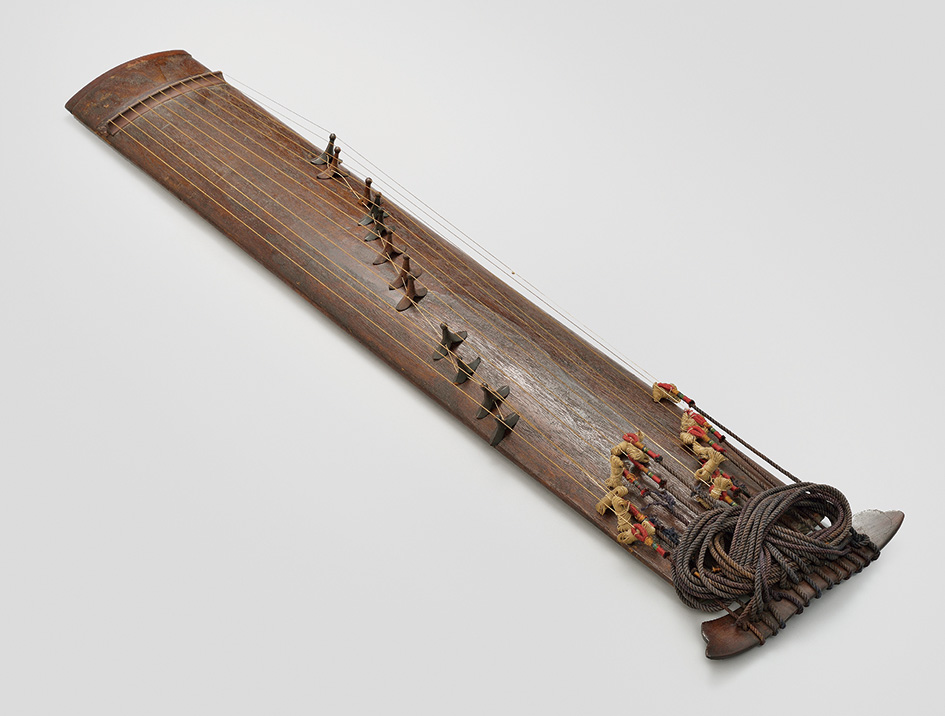
The gayageum was created by the Gaya musician Ureuk in the sixth century. This zither has 12 strings, each of which is supported by a movable bridge for the adjustment of the tuning and intonation. (Photo courtesy of the National Gugak Center)
The geomungo tradition was brought along by Goguryeo migrants to the Unified Silla Kingdom (668–935), which was established on the Korean Peninsula by drawing together the Goguryeo, Baekje, and Silla Kingdoms. According to The History of the Three Kingdoms, the Silla citizen Okbogo secluded himself in a hermitage on Mt. Jirisan called Unsangwon, or “House on the Clouds,” to learn the geomungo. He emerged 50 years later with 30 compositions under his belt. The geomungo virtuoso Okbogo transmitted his skill to a student named Sokmyeongdeuk, who then taught someone called Sir Gwigeum. Sir Gwigeum also went deep into the wilds of Mt. Jirisan to master the geomungo. It seems that these Silla gayageum players chose to practice it in seclusion as a means to become one with the universe. This explains why geomungo skills have been compared to the Way in the Daoist sense of the word. The History of the Three Kingdoms further recounts how Sir Gwigeum passed on his knowledge and skills to two young musicians from the Namwon area, Anjang and Cheongjang. Anjang taught geomungo to his sons Geuksang and Geukjong. Afterwards, the six-stringed zither became widely disseminated across Silla society. It is recorded that there were a whopping 187 geomungo compositions in circulation during the Unified Silla period, testifying to the enormous popularity of this instrument at the time.
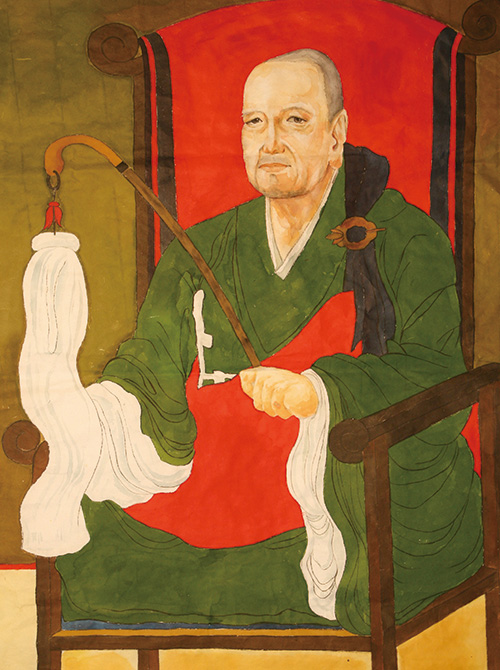
The Ven. Wonhyo propagated Buddhism through music and dance.
(Photo courtesy of the Beompae Folk Culture Museum)
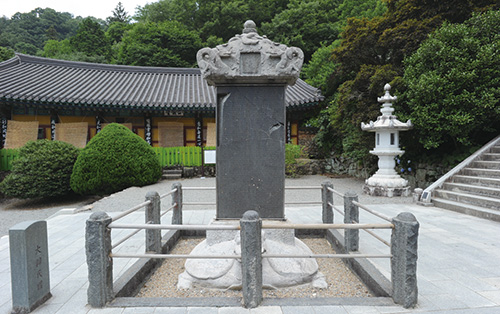
The Ven. Jingam first demonstrated Buddhist songs at today’s Ssanggyesa Temple,
from which the practice of Buddhist songs spread across Korea.
At this temple there is currently a stele eulogizing his virtuous deeds.
(Photo courtesy of the Cultural Heritage Administration)
A Lifelong Passion for the Gayageum
The History of the Three Kingdoms notes that another zither-like Korean instrument with 12 strings called the gayageum was created by King Gasil of Gaya, a federation of several polities occupying the southern portion of the Korean Peninsula from the start of the Common Era through the mid-sixth century. King Gasil commissioned the musician Ureuk to produce 12 pieces for this 12-stringed zither. (The number twelve has long been considered sacred in East Asian philosophy.) The oldest surviving example of a gayageum can be found in Japan at the Shosoin, a royal repository of Japan in Nara that houses treasures from ancient times. This gayageum was delivered to Japan from Silla and is therefore named “the instrument from Silla.” This antique example of a gayageum is remarkably similar to the gayageum of today, not only is the number of strings stretched across a wooden sound box the same, but so is the size and structure. It is an important piece of historical evidence demonstrating how the gayageum has been transmitted over the last 1,300 years with few changes since the time of King Gasil and Ureuk.
As the end of Gaya was drawing near, Ureuk surrendered to Silla and settled in what is now Chungju City. It is believed that Ureuk played the gayageum at a spot now called Tangeumdae, or “Place of Playing the Gayageum.” There is also a modern novel imagining the life story of Ureuk. The Korean novelist Kim Hoon’s work Song of Strings deals with this Gaya musician’s agonies and struggles across his life’s journey, including finally giving in to Silla and introducing them to the gayageum. Receiving Ureuk into Silla society, King Jinheung sent three musicians to learn from the gayageum master. Ureuk respectively taught them singing, dancing, and playing the gayageum according to their individual talents. This story depicts Ureuk as an all-round artist gifted in many forms of the performing arts. With these disciples of Ureuk specializing in what he had taught them, the music of Silla was gradually divided into vocal, instrumental, and dance traditions.
Spreading Buddhism Via Song and Dance
The Ven. Wonhyo (617–686) was a Buddhist monk from Silla who is best remembered for the “water-in-a-gourd” story. According to this fable, the great Silla monk suddenly attained enlightenment on his way to China after drinking what he had believed to be fresh water from a gourd. He later discovered that he had actually drunk water from a skull. The Ven. Wonhyo is credited for widely propagating Buddhism across Silla society. Another Korean history on the Three Kingdoms period, Samguk yusa (The Memorabilia of the Three Kingdoms) from the 13th century accounts that the Ven. Wonhyo abandoned the priesthood after the birth of his son Seolchong and dedicated himself to disseminating Buddhism as a layperson. One day, he happened to find a uniquely shaped gourd that clowns used in their performances. He used this gourd as a model to craft a musical instrument that he named muae, or “unimpeded,” a term taken from the Flower Garland Sutra. The Ven. Wonhyo spread the teachings of the Buddha while playing the muae and singing and dancing. The Memorabilia of the Three Kingdoms relates, “Wonhyo played a critical role in raising awareness of the Buddha’s name and disseminating Buddhist chants among old mulberry farmers, ceramic jar makers, other unenlightened people.” The song and dance he performed while playing the muae were respectively called muhaega (song of muae) and muaemu (dance of muae). The song of muae was long transmitted in Korea thereafter, and was even performed as part of royal ceremonies during the Joseon Dynasty (1392–1910). An analogy can be made between Wonhyo passing on the words of the Buddha by means of songs and dances and modern Christians singing the gospel or maybe even the boy band BTS spreading social values like peace through their choreography.
The Origins of Musical Preaching
In Korean Buddhism, monks do not simply recite Buddhist sutras during major ceremonies, but sing and dance as well. Their songs are called beompae in Korean, meaning “song in Sanskrit,” the ancient language of India in which the Buddhist sutras were written. The monks’ dance is referred to as jakbeop, or “preaching the dharma.”
Beompae were introduced into Korea through the Ven. Jingam (774–850), another prominent Buddhist monk from Silla. He learned Buddhist songs during a period he spent in China from 804 to 830. Returning home, the Ven. Jingam started teaching beompae at Okcheonsa Temple (today’s Ssanggyesa Temple) in Hadong County, from which the practice of Buddhist songs spread across Korea. At this temple where the Ven. Jingam first demonstrated Buddhist songs there stands a stele built in 887 to eulogize his virtuous deeds. The inscription on the stele reads, “Jingam’s beompae was as glorious as gold or jade. The song was amazingly uplifting but at the same time profoundly sorrowful, strongly appealing to anyone who heard it. Word spread widely, attracting an endless stream of people who wished to learn from him. With the temple densely packed with would-be disciples, Jingam was just happy to transmit Buddhist songs to them all.” Based on this inscription, it seems evident that this Buddhist monk almost 1,200 years ago was popular for his singing dexterity on a par with or even surpassing today’s pop musicians. Otherwise, he could not have drawn so many fans from across the country.
Text by Lee Yong-shik, Department of Korean Music of Chonnam National University
Photos by the National Gugak Center, the National Museum of Korea, the Beompae Folk Culture Museum, and the Cultural Heritage Administration

역사 속 뮤지션
방탄소년단의 인기가 하늘을 찌른다. 빌보드 차트 1위는 이제 방탄소년단에게는 새삼스러운 사건도 아니다. 방탄소년단의 ‘수어 춤’은 춤과 노래가 단순한 엔터테인먼트 이상의 표현이 될 수 있다는 사실을 보여준다. 방탄소년단은 한민족의 뛰어난 음악성을 세계에 과시하는 문화대사이다. 방탄소년단의 음악성은 사실 우리 민족의 유전자에 오래 전부터 흐르고 있었다. 고대로부터 뛰어난 뮤지션들이 오늘의 음악을 만든 토양이 된다.
음주가무와 함께 하는 고대국가의 의식
3세기 중국대의 역사가인 진수는 『삼국지』 「위지 동이전」에서 우리 고대국가의 의식을 기록했다. 부여의 영고, 고구려의 동맹, 예의 무천, 삼한의 오월제와 시월제 등 하늘에 제사를 지내는 의식이 있었다. 그리고 이들 의식은 나라의 모든 백성들이 며칠 동안 밤낮 없이 음주가무, 즉 술을 마시고 노래를 부르고 춤을 추면서 하늘에 제사를 지냈다고 기록했다. 이런 고대의 의식은 아마도 한가위 밝은 달을 맞이하여 여성들이 함께 손을 잡고 둥글게 춤추면서 노래를 부르는 강강술래와 비슷한 형태였을 것이다. 이렇게 며칠 동안 노래와 춤을 추는 전통이 얼마나 신기했으면 중국인이 이를 역사서에 남겼을까? 그만큼 우리 민족은 예로부터 음주와 가무를 매우 좋아하던 전통이 있다.
거문고를 만든 왕산악
우리나라의 역사 기록에 가장 먼저 등장하는 뮤지션은 고구려의 왕산악이다. 『삼국사기』에는 고구려의 왕산악이 거문고를 만들고 새롭게 100여 곡을 만들어서 연주했더니 검은 학이 날아와 그 음악에 맞추어 춤을 추었다고 한다. 그래서 이 악기를 ‘검은 학이 춤을 춘 악기’라는 의미로 현학금(玄鶴琴)이라고 부르다가 이후에 현금이라고 한자로 적고 이를 우리말로 거문고라 하게 되었다. 왕산악이 만든 거문고는 고구려인의 웅대한 기상을 표현하는 악기이다. 왕산악이 만든 음악이 얼마나 아름다웠으면 검은 학이 이 음악에 맞추어 춤을 추었을까? 거문고는 전통적으로 선비들이 정신수양을 위해 연주하는 악기였다. 그래서 ‘모든 악기 중의 으뜸’으로 여겨진다. 한 가지 중요한 사실은 왕산악이 당시 나라의 두 번째 높은 직위의 고위 관료였다는 점이다. 즉, 고대에 뮤지션은 사회적 신분이 매우 높았고, 음악은 단순한 엔터테인먼트가 아니라 인간의 성정을 다스리는 중요한 기능을 했다.
거문고의 명인들
고구려 악기였던 거문고는 고구려 멸망 이후 고구려 유민들에 의해 신라 사회에 널리 퍼지게 된다. 『삼국사기』에 의하면 거문고의 명인이었던 옥보고는 지리산 운상원에 들어가 50년 동안 거문고를 익혔다. 옥보고는 새롭게 30곡을 만들어서 속명득에게 가르쳤고, 속명득은 이를 귀금선생에게 전했다. 귀금선생도 지리산에 들어가 거문고를 익혔다. 이들에게 거문고는 단순히 음악을 즐기기 위한 악기가 아니었다. 이들은 속세를 버리고 지리산에 칩거하며 거문고를 연주하면서 도를 익힌 것이다. 그렇기에 이를 흔히 ‘금도(琴道)’라 한다. 귀금선생은 이후 남원의 젊은 음악가였던 안장과 청장에게 자신의 음악을 전수했고, 안장은 그의 아들인 극상과 극종에게 거문고를 가르쳤다. 극종 이후에 거문고를 전공한 이들이 한둘이 아니었다고 한다. 당시 신라 사회에서 연주되던 거문고 곡이 무려 187곡이었다고 하니 거문고가 얼마나 인기 있는 악기였는지 짐작할 수 있다.
가야금 명인 우륵
『삼국사기』에 의하면 가야금은 가야국의 가실왕이 만들었다고 한다. 그리고 가실왕은 가야국의 가야금 명인이었던 우륵에게 12곡을 만들게 했다. 가야금은 12줄이고, 우륵이 만든 음악이 12곡이다. 12라는 숫자는 12간지, 12개월, 12시 등 동양에서는 시간과 관련된 신성한 숫자이다. 일본에는 고대 왕들의 보물을 보관한 창고가 있는데, 나라(奈良)시에 소재한 쇼소인(正倉院)이다. 이곳에는 8세기 무렵 신라에서 전해진 가야금이 보관되어 있다. 우리나라 가야금 중에서 가장 오래 된 유물이다. 일본에서는 이 악기가 신라에서 전해졌기 때문에 ‘시라기고토(新羅琴)’이라고 부른다. 이 유물은 12줄이고 악기의 크기와 구조도 지금의 가야금과 꼭 같다. 가야금이 1,300년 동안 크기와 구조가 변하지 않고 전승되었다는 사실을 알려주는 소중한 유물이다.
우륵은 가야가 멸망할 무렵 제자인 니문과 함께 신라에 귀화하여 국원(현재의 충주)에 터전을 잡는다. 우륵이 가야금을 연주했다는 탄금대가 충주에 있다. 소설가 김훈은 『현의 노래』(2004)에서 가야금을 품고 가야에서 신라로 귀화하는 우륵의 고뇌와 번민을 다루었다. 신라 진흥왕은 주지, 계고, 만덕의 세 사람을 우륵에게 보내 음악을 전수받게 한다. 우륵은 세 제자에게 각각 가야금, 노래, 춤을 가르친다. 우륵은 악가무(樂歌舞)에 모두 능통한 예술가였다는 사실을 의미한다. 그리고 제자들은 자신의 소질에 따라 각각 가야금, 노래, 춤을 전공하면서 기악, 성악, 무용이 분화되는 과정을 거친다.
노래와 춤으로 불교를 포교한 원효대사
『원효대사는 당나라로 유학 가는 도중에 동굴에서 해골 바가지에 물을 마시고 득도하여 신라 사회에 불교를 널리 퍼뜨린 위대한 승려였다. 원효대사는 노래와 춤으로 불교를 포교했다. 『삼국유사』에 의하면 원효대사는 계율을 어기고 설총을 낳은 후부터 속인의 의복으로 바꿔 입고 스스로 소성거사라고 불렀다고 한다. 우연히 광대들이 춤 출 때 쓰는 큰 박을 얻었는데, 이를 <화엄경>의 “일체 무애인(無㝵人)은 한 번에 생사를 벗어난다”라는 구절을 따라 무애라고 이름 지었다. 이후 불교 포교를 위한 노래를 지어 세상에 퍼뜨렸는데, 무애를 연주하면서 노래하고 춤을 추었다. 그래서 “뽕나무 농사 짓는 늙은이나 옹기장이, 무지몽매한 무리에게도 모두 부처님의 이름을 알리고 나무아미타불을 부르게 하는데 원효의 교화가 컸다”고 『삼국유사』에 기록되었다. 원효대사가 무애를 두드리면서 부른 노래는 무애가, 춤은 무애무라고 한다. 특히 무애무는 조선시대에도 궁중에서 연행될 정도로 오랫동안 지속되었다. 불교를 포교했던 원효대사의 노래와 춤이 교회에서 노래하고 춤을 추는 흑인 가스펠과 비슷하지 않았을까? 아니면 세상에 특별한 메시지를 전하는 방탄소년단의 수어 춤과 비슷했을까?
불교음악의 아버지, 진감선사
우리나라 불교는 큰 의식을 행하면 승려들이 노래와 춤을 춘다. 예불에서 <반야심경>과 같은 염불만 외는 게 아니다. 승려들의 노래는 범패(梵唄)라 한다. ‘범’은 ‘산스크리트’를 의미하는데, 고대 불경은 산스크리트어, 즉 범어로 쓰여 있다. 범패는 ‘산스크리트어로 된 노래’라는 의미이다. 범패는 범음(梵音), 범성(梵聲), 인도소리라고도 한다. 승려들의 춤은 ‘작법(作法)’이라 한다. 춤을 통해 부처님의 ‘설법을 만든다’는 의미이다.
범패를 우리나라에 널리 퍼뜨린 이가 신라시대의 큰 스님이었던 진감선사 혜소(774-850)이다. 진감선사는 804년에 당나라에 유학하여 범패를 배우고 830년에 귀국했다. 그는 옥천사에서 범패를 가르쳤고, 이때부터 범패가 우리나라에 성행하게 되었다. 경상남도 하동에 소재한 옥천사(현재는 쌍계사)에는 진감선사의 큰 공덕을 찬양하는 진감선사대공탑(국보 제47호)이 있다. 이 비에 새겨진 비문에 의하면 “[진감]선사는 범패를 잘하여 그 소리가 금이나 옥처럼 아름다웠다. 곡조의 소리는 치우치듯 날 듯 경쾌하면서도 애잔하여 천인들이 듣고 기뻐할 만하였다. 소리가 먼 데까지 전해져서 절이 배우려는 사람들로 가득 찼으나, 싫은 내색 없이 이들을 가르쳤다”고 한다. 경쾌하면서도 애잔한 진감선사의 노래는 아마도 요즘 많은 이들이 즐겨 부르고 듣는 트롯보다 훨씬 아름다운 노래였을 것이다. 그러니 진감선사의 노래를 배우기 위해 절에 가득 찰 정도로 멀리서 많은 이들이 찾아왔을 것이다.
Text by 이용식, 전남대학교 예술대학 국악학과 교수
Photos by 국립국악원, 국립중앙박물관, 범패박물관, 문화재청